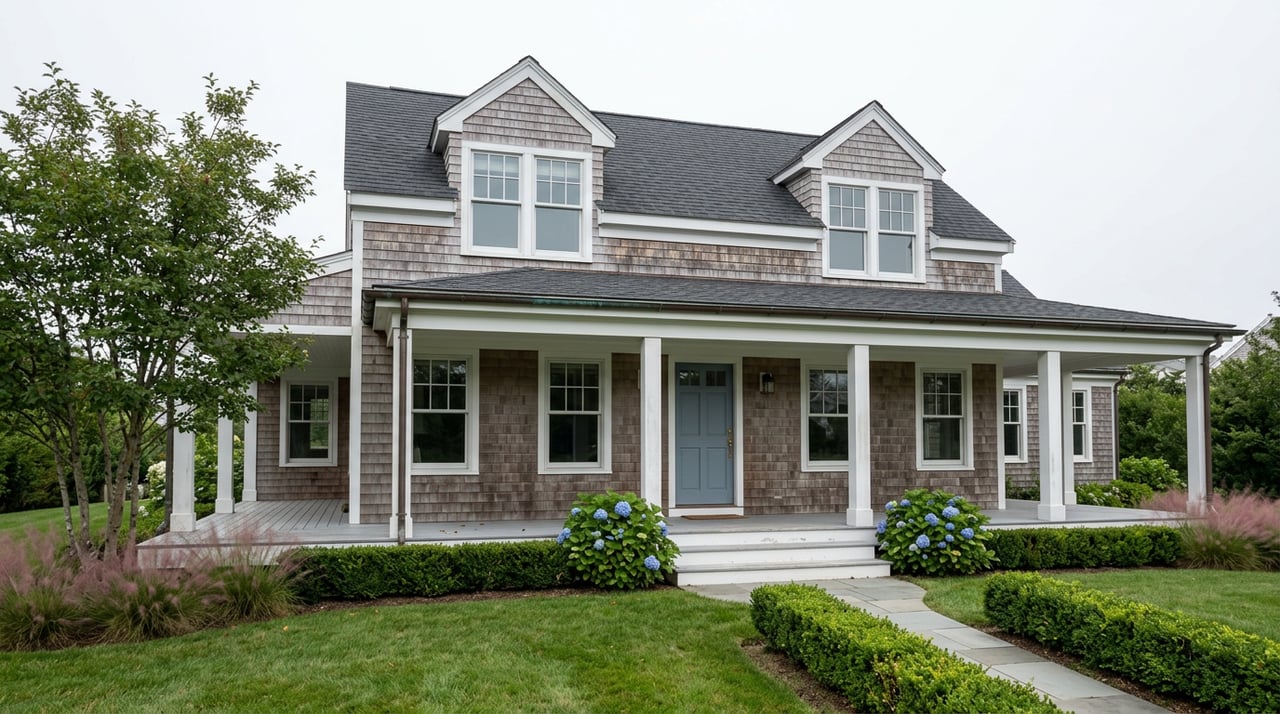
Two listings show up in the same search, ten minutes apart by car, both labeled "Point Pleasant." One sits on a lagoon a few blocks from the Manasquan River. The other sits three blocks from the boardwalk and Jenkinson's. A buyer scrolling a portal sees the same town name attached to both and assumes the same set of rules will apply once the closing is done.
They won't. And the fastest way to find out which Point Pleasant a listing actually belongs to has nothing to do with the price per square foot. It's the rental ordinance.
Point Pleasant Borough and Point Pleasant Beach are separate municipalities. They share a ZIP code, a border, and a name that gets used interchangeably in casual conversation and in listing copy. They do not share a government, a school district, or, as it turns out, an opinion on how long a renter is allowed to stay in a house. That last detail sounds like a footnote. It's actually the clearest signal available for telling a buyer what kind of market they're standing in.
The Same Word, Two Different Rulebooks
Point Pleasant Borough's ordinance is direct: no dwelling, or any part of one, can be rented for a term of less than 30 days. That floor holds year-round. There is no summer exception, no seasonal carve-out, no window where a weekend rental becomes legal. If you own a home in the Borough and you want rental income, you are renting to a tenant who is staying at least a month, in February and in July alike.
Point Pleasant Beach runs on a different clock entirely. From May 15 through September 30, the borough allows rentals as short as seven days. Outside that window, the floor jumps to 30 days, the same as the Borough's rule, but only for seven months of the year. The Beach's own rental properties page spells this out plainly for anyone checking before they buy.
The Beach didn't always regulate this tightly. The borough council passed the current framework in December 2021, and Patch's coverage of that vote captured the argument that shaped it. Mayor Paul Kanitra pushed back hard on the idea that restricting nightly rentals would hurt the local economy, telling the room that a full-time resident living in a house instead of a rotating cast of weekend renters would still be eating out and spending money in town, just on a different schedule. About half the speakers that night agreed. The other half didn't. What passed was a compromise: kill the weekend party rental, keep the week-long summer stay.
That's the mechanism. Now here's what it tells you.
What the Rule Is Actually Measuring
An ordinance doesn't get written in a vacuum. Point Pleasant Beach regulates rental duration because rental duration was a live problem there, enough of one that residents showed up to a council meeting and used the phrase "party houses" to describe what their neighbors' properties had become. That's a tourist and investor economy dense enough to generate friction, dense enough that the town felt it needed a rule with a seasonal on-ramp rather than an outright ban, because banning short stays entirely would have meant banning the thing half the local economy runs on every summer.
Point Pleasant Borough's flat, no-exceptions 30-day minimum reads differently. There's no seasonal carve-out because there's no season to carve around. A boating and family community organized around the Manasquan River doesn't need a summer exception to a rule built for weekend turnover, because weekend turnover was never the pressure point in the first place. The ordinance isn't managing a tourist economy. It's protecting a residential one from becoming something else.
Same word on the sign. Two different reasons the sign exists.
For a buyer weighing whether to hold a property as a rental or a full-time home, this is the fact that should drive the decision, not the listing photos. A Beach property can carry a summer week-to-week income stream that a Borough property legally cannot replicate under any circumstance. A Borough property offers something the Beach can't promise as reliably: a neighbor who is going to be there in January the same way they were there in July.
The Corner That Tells the Same Story in Concrete
The regulatory divergence shows up in what gets built, too. In March 2026, Point Pleasant Beach's planning board approved a mixed-use redevelopment at 501 Arnold Avenue, the corner where a vacant Bank of America building had sat for years after online banking thinned out the need for a branch that size. The approved plan replaces it with five commercial units on the ground floor and 24 apartments above, positioned to keep the small-business feel of Arnold Avenue intact while adding density right in the borough's commercial spine.
That's the kind of visible, mixed-use, apartments-over-storefronts project that shows up in a town where the daytime population swells every summer and the commercial corridor has to work harder to serve it. It's not the kind of project that happens in a town where the housing stock is already built out and mostly single-family. Point Pleasant Borough's development activity in the same window looks quieter: older homes and waterfront properties gradually replaced in place, driven by land value and updated coastal construction standards rather than new commercial density. Neither pattern is better. They're evidence of the same fork the rental ordinances already showed you.
A Revaluation Year, on the Beach Side Only
Here's a detail that matters if you're closing in Point Pleasant Beach this year specifically. The borough's own tax assessor's office confirms that 2026 is a revaluation year there, which changes the calendar in a way that catches buyers off guard. In a normal year, the New Jersey property tax appeal deadline is April 1. In a revaluation year, that deadline moves to May 1.
Point Pleasant Borough runs under the identical statutory rule, the same April 1 or May 1 mechanic applies whenever it conducts its own reassessment, but that's a separate roll on a separate schedule, decided independently by its own assessor's office. Nothing about the Beach's 2026 revaluation tells you anything about where the Borough's assessment cycle currently stands. If you're buying in the Beach this year, ask whether the seller has already received a revaluation notice and whether they've appealed it. That single question can change what you're actually budgeting for once the new assessed value lands.
Before You Write an Offer
If you're comparing homes across this line, a few questions are worth asking before you get attached to a number:
- Which municipality is the deed actually filed in, not just which name the listing uses.
- If you want rental income, whether the property's town allows the rental pattern you're planning, since one side of the line bans anything under 30 days and the other only relaxes that rule for four and a half months.
- If the home is in Point Pleasant Beach, whether it has already been through this year's revaluation and what the new assessed value means for the tax line you're budgeting against.
- Whether the neighborhood's character, boating and school-district stability on one side, walkable and tourism-driven on the other, actually matches what you're trying to buy.
None of these questions show up on a portal's summary page. They show up in the ordinance, the tax office, and the planning board minutes, which is exactly where a buyer's due diligence should be looking anyway.
The name on the sign was never the whole story. The rule attached to the address always was.
If you're comparing homes across the Point Pleasant line and want a clear read on which market a specific address actually belongs to, reach out to Michele Taylor Properties. Design sense matters once you own the place. Knowing which town's rulebook you're buying into matters before you make the offer.